Warning: is_file(): open_basedir restriction in effect. File(/var/www/virtual/agenda2029.es/spainonline.com/htdocs/sites/all/modules/i18n/i18n_object.inc) is not within the allowed path(s): (/var/www/virtual/agenda2029.es/spainonline.com/stage/htdocs:/var/www/virtual/agenda2029.es/phptmp:/usr/share/php/:/var/www/helpers/:/dev/random:/dev/urandom) in Drupal\xautoload\ClassLoader\AbstractQueuedCachedClassLoader->loadClass() (line 82 of /var/www/virtual/agenda2029.es/spainonline.com/stage/htdocs/sites/all/modules/xautoload/src/ClassLoader/AbstractQueuedCachedClassLoader.php).
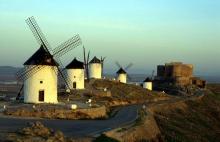
The region of Castile-La Mancha occupies the low tablelands of the Spanish peninsula bordering the east and south of Madrid and is made up of five provinces with each one named after its capital city: Toledo, Ciudad Real, Albacete, Guadalajara, Cuenca.
Extremadura has a population of just over one million in an area of 41,000sq km which makes it the third most sparsely populated region in Spain. Extremadura consists of only two provinces: Badajoz and Cáceres, and it's capital is Merida.
Aragon is the fourth (out of seventeen) largest region of Spain and makes up a tenth of the whole area of Spain. It has a population of some one and quarter million, but at a very low density (24 compared to the national average of 76 a square kilometre).
The region is an important central gateway between Spain and Portugal and the rest of Europe, as it has nearly one hundred miles of frontier with France. This strategic importance was underlined when Zaragoza, the regional capital, was chosen as the Expo City 2008 with the theme of “Water and Sustainable Development”.
Castile and Leon is the largest region in Spain, amounting to a fifth of the country. At the same time it has one of the lowest densities for its population of just over two and a half million citizens.
Andalusia is the autonomous region of in the south of Spain. The outstanding sun and diamond blue skies give the Andalucians their life-loving and friendly character.

 , as it has nearly one hundred miles of frontier with France. This strategic importance was underlined when Zaragoza, the regional capital, was chosen as the Expo City 2008 with the theme of “Water and Sustainable Development”.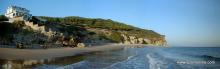


 Nederlands
 English
 Deutsch
 Italiano
 Español